Loading
Showing posts with label backgammon. Show all posts

Monday, October 27, 2008


The History of Mahjongg
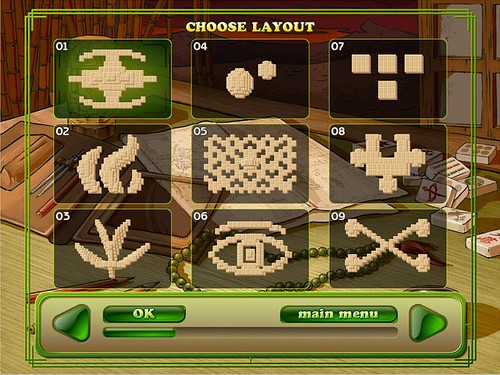
During a recent visit to my parent's house I noticed a solid black briefcase on the kitchen table. I was curious as to what was inside. From it's size, I thought it might be a laptop computer. My mom opened the briefcase to reveal several colorful tiles and game pieces. She informed me that it was her Mahjongg tile set. She plays this ancient Chinese game weekly with her friends. 

Read Full Story>>>>

---------------------------------------------------------------------------------------------------------------

The History of Backgammon

 
The history of backgammon, the oldest known board game, is an interesting one that began almost 5,000 years ago in Mesopotamia. Numerous variations of the game were adopted by other cultures throughout the history of backgammon. Archaeologists continue to discover many similar games in the ruins of ancient civilizations as they explore the intriguing history of backgammon.

Read Full Story>>>> 

---------------------------------------------------------------------------------------------------------------

The History of Chess

 
The history of chess isn’t especially clear – there’s hardly a country in the world that doesn’t claim to have invented it, including China, Egypt, Greece, Uzbekistan and (most unbelievably) Ireland. Given the evidence, however, it seems most likely than the game of chess has its origins in 6th century India, and was then refined in Persia, from where it travelled to Europe and much later on to America.

Read Full Story>>>>


Tuesday, July 15, 2008

The Fascinating History Of Backgammon

Backgammon has a long fascinating history of more than 5000 years, making it one of the oldest games in civilization. The earliest backgammon board, from an early version of the game, was found circa 3000 B.C. in the royal cemetery in Ur of the Chaldees in southern Mesopotamia(now called Iraq), the birthplace of Abraham.
The game has been played around the world and throughout recorded history. A form of the game was enjoyed by the Egyptian Pharoahs; boards dating from 1500 B.C. were found in King Tut's tomb. Wall paintingsin many Egyptian tombs portray people playing the game, indicating that it was played by the common people as well as the Pharaohs. A thousand years later, the Greeks were playing a form of the game. Homer, Sophocles, and Plato mention the game in their works. In Rome, the game long remained one of the most popular among the patricians. Emperor Claudius reportedly wrote a book on backgammon.
The excavators of Pompeii found a backgammon table in the courtyard of almost every villa. Various early versions of the game were popular in Britain, dating from the Crusades. It has always been a favourite game of the English. It is believed that the current form of the game evolved in the tenth century. Backgammon has been played in the United States since the seventeenth century.
However, the doubling cube was only introduced to the game in the early 1920s by an anonymous genius. This greatly enhanced the quality of backgammon and increased its popularity in the United States. The game had another surge of interest in the 1970s, but has waned in popularity in recent years due primarily to the advent of video and computer games.
When backgammon is played with the right people and strategy, it can be a very fascinating and addictive game for everybody. Hopefully, interest in this ancient game will increase in the near future. Perhaps, if more people discover the real game of backgammon, it will regain the popularity that it deserves.

Monday, June 23, 2008

The History of Backgammon

The history of backgammon, the oldest known board game, is an interesting one that began almost 5,000 years ago in Mesopotamia. Numerous variations of the game were adopted by other cultures throughout the history of backgammon. Archaeologists continue to discover many similar games in the ruins of ancient civilizations as they explore the intriguing history of backgammon.

The actual name for backgammon comes from a Welsh term meaning “wee battle.” However, the history of backgammon reflects many different names and versions. The aristocracy and slave population of Egypt and Greece played a similar game called, “senat.” The Romans changed the number of dice from two to three and called it “bac gamen” or “back game.” From the Roman civilization, backgammon moved to Persia, where it was again played with two dice in a game called “Takhteh Nard" or "Battle on Wood." During the time of the Crusades, the Anglo Saxon soldiers and traders played yet another version called “Tables” or “Tabula.”

Throughout the history of backgammon, the Church attempted several times to ban the game, but always failed. Cardinal Woolsey, in the 16th century, ordered all the boards burned, calling the game “the devil’s folly.” Burning the boards was useless, however, since any type of board could be drawn in dirt or sand and played with small pebbles. Dice were often handmade and were small enough to be easily concealed on a person or hidden in someone’s home. Furthermore, the English were very clever and decided to disguise the backgammon board as a folding book. Their innovative craftsmanship is still evident in the board we use today.

Edmund Hoyle, the famous writer and gamesman, documented the rules and the history of backgammon in the mid 1700’s. Colonists from England brought backgammon to their homes in America, along with chess and other board games of the times. Although the game of backgammon lost some popularity in the Victorian era, it quickly reappeared and gained strength in the 20th century. At this time, an unknown inventor devised the doubling cube, which offers players the opportunity to multiply their initial wager by the amount on the doubling cube. Of course, some strategy and experience is needed before using the doubling cube.

Tournaments, books, magazines, and clubs are now a part of the history of backgammon. The introduction of the game on the Internet has increased its popularity to an even greater extent. Backgammon is a fast-paced, challenging, and entertaining game of skill and luck.