When it comes to games for kids, there is a never-ending supply. You go to the grocery store and you see games. You go to the thrift store and you see games. Games for kids even come in $1.99 meals you buy at the drive through. So why is it so hard to find educational games that your kids will want to play?
Showing posts with label games. Show all posts
Showing posts with label games. Show all posts
Friday, December 11, 2009

Monday, June 1, 2009
Bionic Commando
 In the 1988 classic, Radd, our hero was a a few square pixels wide. Now he’s back – in a sparkling 3D version of the swing-and-shoot action game.
Publisher: Capcom
Developer: Grin
Platform: PC, Xbox 360, PS3
Price: Rs 3,499 for the Xbox and PS3 version
Rating: * * * * *
Nathan Radd Spencer, is pissed off. Why shouldn’t he be, our appendaged hero in the 1988 classic stopped the resurrection of the nefarious Master-D, a clone of Hitler, saving Ascension city. In return he got his bionic arm confiscated, and his bionic butt thrown into a cell because the public got scared of the whole bionic thing.
Fresh and rebooted from the 80’s into sparkling 3D in Bionic Commando, Nathan, sporting dreads and a bad ‘tude gets sprung out 10 years later by the enigmatic commando Super Joe. He’s been reincarnated in the wake of the Bionic Purge, when an electromagnetic device is detonated, leaving Ascension city in ruins. Capcom’s signature campy dialogue is not gripping, but charming and funny nonetheless.
The bulk of the game is built around Radd’s Bionic arm, equipped with a grappling hook, which he uses to swing around like Spiderman.
Being brutally honest here, you need time to get used to the game – it’s not easy by any yardstick. Even after playing the tutorial, the first 10 minutes will make you just give up or smash your controller. Once you get used to the swinging, the gameplay shines forth. As you play the game you ‘remember’ powers, which unlock different abilities, like ripping wreckage from the walls, or punching debris into enemies.
The gunplay is weak; while you do get an occasional big gun, most of the time you have nothing but your standard pistol. You must rely on grapple attacks, where you latch on to an enemy, reel him in, and dismantle with a satisfying kick.
Another frustrating annoyance is the sheer number of ways you can die. Even though it seems like an open ended world, any exploration beyond the usual boundaries results in death by radiation. Sometimes you wonder why you died. You die with a few bullets, you drown with the weight of the arm in flooded areas, you die when you touch fire, you die when you fall. Not only that, you probably have to restart at one of the very ill positioned checkpoints, which if you’re lucky, won’t have you re-watching the cut-scenes.
While all of this may seem monotonous, one must credit the developers for having lovingly crafted a brilliant looking post-apocalyptic wasteland. Bionic Commando gets better as you play on. Especially towards the end levels, is where everything ramps up to an epic ending. The boss battles are satisfying, one of the hallmarks of the game. They are refreshingly challenging, it takes lots of skill and strategy to bring them down.
Bottom line is, you either will love or hate this game. If you do decide to go in for this, you are in for a frustrating time at first with the controls.
Persevere, and you will be rewarded with a very satisfying experience.
 |
![Reblog this post [with Zemanta]](https://lh3.googleusercontent.com/blogger_img_proxy/AEn0k_uzEcjv3O2LTJGsGpEMhNp2KG7lnpnt039c2twOQ7HQm7ne7JpcIQgdhKAd7JEthw3xNFVPDfWKR_C5vks-qoINBnuuF1eG9XagG_YL2cN_u_h4paLXtSuvV8dSTb_ehjAd9Du67um3gFHhm0oMVJ31=s0-d)
Monday, October 27, 2008
The History of Mahjongg
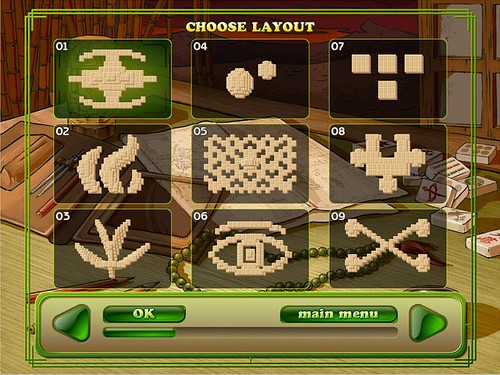
During a recent visit to my parent's house I noticed a solid black briefcase on the kitchen table. I was curious as to what was inside. From it's size, I thought it might be a laptop computer. My mom opened the briefcase to reveal several colorful tiles and game pieces. She informed me that it was her Mahjongg tile set. She plays this ancient Chinese game weekly with her friends.
Read Full Story>>>>
---------------------------------------------------------------------------------------------------------------
The History of Backgammon

The history of backgammon, the oldest known board game, is an interesting one that began almost 5,000 years ago in Mesopotamia. Numerous variations of the game were adopted by other cultures throughout the history of backgammon. Archaeologists continue to discover many similar games in the ruins of ancient civilizations as they explore the intriguing history of backgammon.
Read Full Story>>>>
---------------------------------------------------------------------------------------------------------------
The History of Chess

The history of chess isn’t especially clear – there’s hardly a country in the world that doesn’t claim to have invented it, including China, Egypt, Greece, Uzbekistan and (most unbelievably) Ireland. Given the evidence, however, it seems most likely than the game of chess has its origins in 6th century India, and was then refined in Persia, from where it travelled to Europe and much later on to America.
Read Full Story>>>>
Tuesday, October 14, 2008

Wednesday, August 6, 2008
Free Online Games and Their History
Among the old time classic games we have all of those which are organized under board games, these have been around for quite some time, some go centuries in the past which makes them all time classics. The way they are designed which requires constant thinking and planning are one of the few factors which make these games so desirable and addictive.
A brief research in board games shows remarkable facts about the history of board games, the oldest is said to date back to 3500 BC, this board game was called "Senet" which in ancient Egyptian translates to "passing game" ever since the first board entertainment games were invented they have evolved into more interesting forms which have been spread all over the world with the power of the internet.
One board game which became popular in the early nineties is called battle-ship. The fact that this board game became popular during this decade is not an indicator of its age though, this game was first invented in 1931 and was first published Milton Bradley which gave a new design and spin in the 90's.
Today, this legend lives on the web were it is accessible to millions of people around the globe. The rules and instructions to this game are quite easy, it is played in a double board setting which is divided by a similar vertical board where players can keep track of the attacks they have made on the opponent through a square tracking system. The goal is to try to find the exact position of your enemy's ships and sink them before they sink yours. When a player finds one ship he/she can keep on firing until a shot is missed, then it's your opponent turn to try to take on your fleet.
The fleet consists of 5 vessels they are: an aircraft carrier which is often easy to take down due to its five square size, then we have a battleship which is somewhat easy to target because it covers 4 squares, a cruiser covers three squares, the submarine covers 3 and can be quite hard to find and last but not least we have the patrol boat which covers two squares and can be a nightmare if you have found all others but not this one. When played online you can play against the computer or against an actual player through social sites which makes things even more interesting and addictive.
A brief research in board games shows remarkable facts about the history of board games, the oldest is said to date back to 3500 BC, this board game was called "Senet" which in ancient Egyptian translates to "passing game" ever since the first board entertainment games were invented they have evolved into more interesting forms which have been spread all over the world with the power of the internet.
One board game which became popular in the early nineties is called battle-ship. The fact that this board game became popular during this decade is not an indicator of its age though, this game was first invented in 1931 and was first published Milton Bradley which gave a new design and spin in the 90's.
Today, this legend lives on the web were it is accessible to millions of people around the globe. The rules and instructions to this game are quite easy, it is played in a double board setting which is divided by a similar vertical board where players can keep track of the attacks they have made on the opponent through a square tracking system. The goal is to try to find the exact position of your enemy's ships and sink them before they sink yours. When a player finds one ship he/she can keep on firing until a shot is missed, then it's your opponent turn to try to take on your fleet.
The fleet consists of 5 vessels they are: an aircraft carrier which is often easy to take down due to its five square size, then we have a battleship which is somewhat easy to target because it covers 4 squares, a cruiser covers three squares, the submarine covers 3 and can be quite hard to find and last but not least we have the patrol boat which covers two squares and can be a nightmare if you have found all others but not this one. When played online you can play against the computer or against an actual player through social sites which makes things even more interesting and addictive.
Monday, July 21, 2008
Runescape: History and Development of the Game
Runescape is an extremely popular Multi Massive Online Role Playing Game (MMORPG), that was created by Andrew Gower, and is currently owned and operated by Jagex, Ltd. The game offers to methods of play: free and paid. Runescape currently has over 9 millions active Free players, and more then 800,000 subscribed paying members. The game is written in JavaScript and can be played through an ordinary web browser such as Internet Explorer, or Firefox.
Runescape takes players to the medieval fantasy realm of Gielinor. This world is further split into several kingdoms: Misthalin, Asgarnia, Kandarin, the volcanic tropics of Karamja, dry desert of Kharidian Desert, and of course the Wilderness. The wilderness is the only area of the world that players may currently battle or “player-kill” each other. Currently the only mode of transportation is to walk or run. Users at higher levels can make us of Magic Teleportation to a few select towns or realms. All of the above mentioned regions each offer different enemies and monsters for the players to battle.
During a players adventures in Runescape they will encounter many quests, and are able to set their own goals and achievements. There is no “one” right way to play the game. Players are also encouraged to communicate with other players by means, of chatting, trading with each other, or simply cooperating with each other to help finish the quests.
As a Cambridge University undergraduate, Andrew Gower worked on writing the game with the help of his brother, Paul Gower. Through several trials and tribulations, Runescape was eventually released to the public in a beta version, on Jan. 4, 2001. The game was originally operated from there house in Nottingham. Eventually the brother duo tagged the company name Jagex.
About a year after the beta was released the brothers decided to open up the membership services for Runescape. This would allow players to pay a small monthly fee to access new in game skills, items, and a variety of other features not available to free members.
With the continued growth of Runescape game the challenges to also update the game's technological aspects as well. Being written in JavaScript the game was easily suspectable to “hacks.” This forced Jagex developers to completely rewrite the gaming engine. This rewrite also added a more three dimensional look and feel to the game as well. This version of the game became known as Runescape 2, but has since then completely taken over the original Runescape Classic version. Runescape 2 was initially released to all paying members around earlier December of 2003, and was release to free members on March 29, 2004. As of Jan. 12, 2006 Runescape Classic is only available for play if you are a subscribed member.
There are currently Runescape servers located in 7 different countries! With over 130 servers total, and new servers are constantly being added due the overwhelming popularity of the game. Currently each Runescape server can hold 2,000 players, this enables the servers to hold around 260,000 simultaneous players at any given time. The servers are split into Free worlds and Member worlds.
Runescape takes players to the medieval fantasy realm of Gielinor. This world is further split into several kingdoms: Misthalin, Asgarnia, Kandarin, the volcanic tropics of Karamja, dry desert of Kharidian Desert, and of course the Wilderness. The wilderness is the only area of the world that players may currently battle or “player-kill” each other. Currently the only mode of transportation is to walk or run. Users at higher levels can make us of Magic Teleportation to a few select towns or realms. All of the above mentioned regions each offer different enemies and monsters for the players to battle.
During a players adventures in Runescape they will encounter many quests, and are able to set their own goals and achievements. There is no “one” right way to play the game. Players are also encouraged to communicate with other players by means, of chatting, trading with each other, or simply cooperating with each other to help finish the quests.
As a Cambridge University undergraduate, Andrew Gower worked on writing the game with the help of his brother, Paul Gower. Through several trials and tribulations, Runescape was eventually released to the public in a beta version, on Jan. 4, 2001. The game was originally operated from there house in Nottingham. Eventually the brother duo tagged the company name Jagex.
About a year after the beta was released the brothers decided to open up the membership services for Runescape. This would allow players to pay a small monthly fee to access new in game skills, items, and a variety of other features not available to free members.
With the continued growth of Runescape game the challenges to also update the game's technological aspects as well. Being written in JavaScript the game was easily suspectable to “hacks.” This forced Jagex developers to completely rewrite the gaming engine. This rewrite also added a more three dimensional look and feel to the game as well. This version of the game became known as Runescape 2, but has since then completely taken over the original Runescape Classic version. Runescape 2 was initially released to all paying members around earlier December of 2003, and was release to free members on March 29, 2004. As of Jan. 12, 2006 Runescape Classic is only available for play if you are a subscribed member.
There are currently Runescape servers located in 7 different countries! With over 130 servers total, and new servers are constantly being added due the overwhelming popularity of the game. Currently each Runescape server can hold 2,000 players, this enables the servers to hold around 260,000 simultaneous players at any given time. The servers are split into Free worlds and Member worlds.
Saturday, July 12, 2008
The Sims Makes History
A recent online survey of PC gamers has revealed that "The Sims" is one of the most popular and best-selling games of all time.
Electronic Arts, distributors of the game, announced that the virtual-life game created by Will Wright and Maxis, has sold over 7 million copies worldwide (2002) to dethrone Myst as the top-selling computer game of all time. If you combine The Sims with all its expansion versions, The Sims series will have accounted for more than 13 million sales worldwide.
The Sims was first released on February 4, 2000 and, since then, seven expansion packs and a sequel, The Sims 2, have been released.
The great appeal of the game is that, instead of meeting a set of objectives, players engage in a fully interactive environment and are encouraged to make choices about everyday living. It is up to the player to decide how he wants to spend his "virtual day," with the only real objective being how to organize his time and activities to help him reach his personal goals.
Like real people, Sims (which also refers to the virtual character in the game as well as the game itself) have a certain amount of free will, which means they can choose to ignore a player's commands and do something else that they think is more important, just like real people. For example, you may want to make them go to the supermarket or visit a friend, but if their energy level is too low, the Sim may just decide to sleep instead to build up his energy reserves.
The game calls for players to make decisions for their Sim characters about personal development (such as adding specific activities like exercise and reading to enhance creativity, and logic), personal hygiene (how often he must clean the house, do the dishes or take out the garbage), personal finances (what kind of job does he take on and how does he spend his income), eating, and sleeping.
Let's say the Sim does not have enough eat or sleep, or has not created a healthy environment, they could get sick and die. If the Sim does not have enough recreational activities, his fun level bar falls and he becomes depressed (but never to the point that he commits suicide).
Players also have control over how their Sim character relates with other characters. They can make their Sim a nasty person who insults, slaps or even attacks other Sims, which usually means they get insulted, slapped and attacked in return.
Electronic Arts, distributors of the game, announced that the virtual-life game created by Will Wright and Maxis, has sold over 7 million copies worldwide (2002) to dethrone Myst as the top-selling computer game of all time. If you combine The Sims with all its expansion versions, The Sims series will have accounted for more than 13 million sales worldwide.
The Sims was first released on February 4, 2000 and, since then, seven expansion packs and a sequel, The Sims 2, have been released.
The great appeal of the game is that, instead of meeting a set of objectives, players engage in a fully interactive environment and are encouraged to make choices about everyday living. It is up to the player to decide how he wants to spend his "virtual day," with the only real objective being how to organize his time and activities to help him reach his personal goals.
Like real people, Sims (which also refers to the virtual character in the game as well as the game itself) have a certain amount of free will, which means they can choose to ignore a player's commands and do something else that they think is more important, just like real people. For example, you may want to make them go to the supermarket or visit a friend, but if their energy level is too low, the Sim may just decide to sleep instead to build up his energy reserves.
The game calls for players to make decisions for their Sim characters about personal development (such as adding specific activities like exercise and reading to enhance creativity, and logic), personal hygiene (how often he must clean the house, do the dishes or take out the garbage), personal finances (what kind of job does he take on and how does he spend his income), eating, and sleeping.
Let's say the Sim does not have enough eat or sleep, or has not created a healthy environment, they could get sick and die. If the Sim does not have enough recreational activities, his fun level bar falls and he becomes depressed (but never to the point that he commits suicide).
Players also have control over how their Sim character relates with other characters. They can make their Sim a nasty person who insults, slaps or even attacks other Sims, which usually means they get insulted, slapped and attacked in return.
Monday, June 23, 2008
The History of Chess
The history of chess isn’t especially clear – there’s hardly a country in the world that doesn’t claim to have invented it, including China, Egypt, Greece, Uzbekistan and (most unbelievably) Ireland. Given the evidence, however, it seems most likely than the game of chess has its origins in 6th century India, and was then refined in Persia, from where it travelled to Europe and much later on to America.
The word ‘chess’ itself is believed to be a mangled pronunciation of the Persian word ‘shah’, which means king (and is still used today, as in ‘Shah of Iran’). ‘Checkmate’, in this theory, comes from ‘shah mat’, which is Persian for ‘the king is finished’.
Chess is notable in the development of games because it does not use dice, meaning that there is no element of luck involved – it is a game of pure skill and strategy. One Indian legend has the game being created by a wise man who was asked by a king to create a game that would enhance his mental abilities and have nothing to do with luck.
While India is keen to claim chess, however, it is hotly disputed. Most Chinese people believe that China invented chess, and also believe that the game is far inferior to Go, which is both older and generally considered more difficult. The Chinese point out that Go has existed since at least 2,000BC, and is played without dice, making it a very likely inspiration for chess.
Iran (Persia), on the other hand, claims that chess is derived from its invention of backgammon, and cite writings and poems that seem to put its date further back than the Indian version. There is no doubting that the version of chess that came to Europe we play today came mainly from Persia, but it is difficult to know exactly where Persia got its inspiration from.
Subscribe to:
Posts (Atom)